Call Us Now | Email Us Now
02.20.2026

Basement Apartments and ADUs in Hamilton: What People Overlook

Buyer Basics

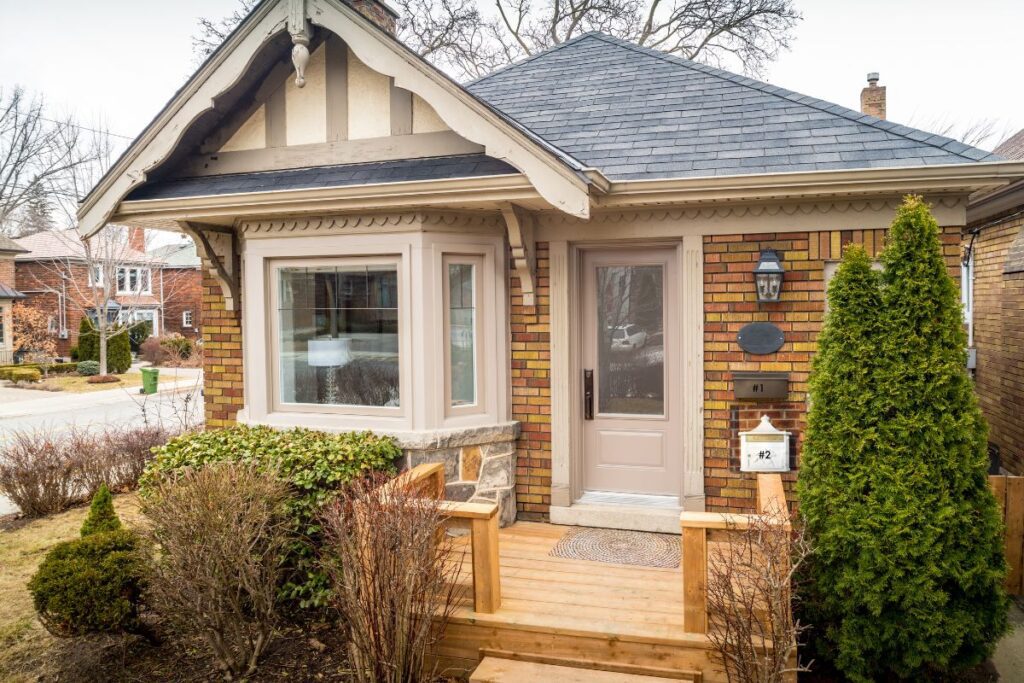
Basement apartments and ADUs in Hamilton are everywhere.

Some were added for aging parents.
Some were created to help cover a mortgage.
Some were built intentionally as income-generating units.
Others have been carved out over time.

They’ve become part of Hamilton’s housing landscape, and in many cases, they work really well.

What doesn’t get talked about much are the everyday realities that tend to show up after someone has already moved in. 👀

Most aren’t dramatic problems or horror stories. Just the practical details that were never part of the original design when the house was built for one household. The kind of nuisances that can interfere with enjoyment.

Whether you’re buying a home with a secondary unit or renting one, here are a few of the things people often discover later.

Safety and Fire Separation 🔥

This is the first place to look because this one goes beyond inconvenience.

The Ontario Building Code sets standards for secondary dwelling units, particularly around fire safety. Requirements can include:

  • Properly sized egress windows
  • At least two safe exits
  • Minimum ceiling heights
  • Fire separation between units
  • Interconnected smoke alarms
  • Specific drywall thickness or fire-rated assemblies
  • In some cases, sprinkler systems

Some units meet these standards, others pre-date them. Some have been partially upgraded but still fall short of full compliance.

If you’re buying, verify what was permitted and inspected.
If you’re renting, look at basics like exits and window size.

Safety should be a priority when choosing a place to live.

One Address, One Mailbox 📬

In many neighbourhoods with community mailboxes, Canada Post assigns one box per civic address.

Two units, only one mailbox. 🚨

That means:

  • One key
  • Shared access
  • Shared responsibility

Who holds the key? How is privacy handled? How do you make sure sensitive mail isn’t misplaced?

It’s rarely discussed during a showing, but it matters once you’re there.

Utilities and Shared Systems 🌡️

In homes that were originally single-family, utilities are often shared.

That usually means one furnace, one thermostat, one hydro meter, and one water meter.

In some properties, electricity has been separated and individually metered. That helps with clarity on hydro usage. But even in those cases, heating and water are often still shared systems, so not everything is fully divided.

Sometimes costs are split informally (often 60/40 to account for the basement being a bit smaller). Less often, utilities are included in rent, especially if the primary unit is owner-occupied.

The practical questions usually show up later:

Who controls the temperature?
What happens if one unit uses significantly more power?
Who holds the account with the provider?
What if one party doesn’t pay their share?

If service is interrupted, everyone in the house feels it. Several basement renters have shared that beyond what a listing shows, things like temperature control and noise from upstairs became everyday concerns once they moved in, especially when utilities were included and they didn’t have individual control.

Garbage in Hamilton Is About Coordination 🗑️

Hamilton allows one garbage container per residential address.

That container can absolutely hold multiple smaller bags. In many cases, one large bin is more than enough for two households.

The friction usually isn’t about space, but about coordination.

  • Who stores the bin?
  • Who takes it to the curb?
  • Who buys tags if you exceed the limit?
  • What happens if one unit fills it first?
  • Who cleans it in July when something leaks?

These are everyday logistics that single-family homes never have to negotiate.

Parking Can Be Straightforward… Or Not 🚗🚗

Some homes handle this beautifully. Two-car driveways, clearly assigned spots, neighbourly cooperation.

Others take a little more effort to come up with acceptable arrangements.

If a shared driveway is single-width, someone is going to be moving their car. That’s just reality. And it’s fine if everyone’s schedule lines up. It’s less fine when someone works shifts, leaves early, or gets home late.

I have one client who moved into a 3-unit home with a long, single-wide driveway. They’re happy and making it work, but the amount of coordination it requires to make sure everyone has a spot with such different work schedules is impressive!

Sometimes there’s plenty of street parking and it’s a complete non-issue. Other times, street parking technically exists, but neighbours aren’t thrilled about the same cars lining the curb every day.

In winter, snow piles can shrink what felt like generous space in July. Guest parking becomes a negotiation. Delivery drivers block residents in.

None of this means a property doesn’t work as a multi-unit dwelling. It just means parking in a converted home isn’t always as simple as it looks during a sunny showing.

It’s worth asking:

  • Who parks where?
  • Is anything formally assigned?
  • How does it work in winter?

Because driveway choreography feels very different once you’re living it.

Sound Transmission 👂

Older homes were not built with sound separation between floors.

That can mean hearing footsteps overhead, the hum of a laundry cycle, an early morning alarm, late-night conversations, dogs barking, or children playing.

And here’s the part people don’t always factor in: tenants change.

The quiet couple upstairs this year might move out next year. A family with young kids might move in. A shift worker could replace someone who kept regular hours. An owner who once lived upstairs might decide to rent the space instead.

If you’re in the basement especially, your day-to-day experience can shift depending on who’s above you.

No one is necessarily being unreasonable. It’s simply shared living in a structure that wasn’t originally designed for layered households.

When you’re looking at a space, it helps to think about lifestyle compatibility, as well as layout and square footage.

Water Pressure and Plumbing 🚿

Most of these homes were built with one kitchen and one bathroom in mind. When a second kitchen and extra bathrooms are added later, the original plumbing is still doing its thing.

You’ll usually notice it during the morning rush. Two showers running. Someone washing dishes upstairs. A toilet flush at exactly the wrong moment. The water pressure drops. The temperature changes. Someone yells from behind a bathroom door.

It’s common in older Hamilton homes. They just weren’t built with layered living in mind.

It’s the kind of detail that doesn’t show up during a quiet showing, but becomes obvious once real life kicks in.

Outdoor Space and Maintenance 🌱❄️🧹🐶

Shared outdoor space sounds lovely in theory.

Until it snows.

Or the grass hits that one week in June where it grows three inches overnight.

When a yard is shared, the questions start stacking up pretty quickly. Who shovels? Who cuts the grass? Who trims the hedges before they take over the walkway? Who gets the shed? And who’s hosting the backyard barbecue on Saturday night?

And then there’s the dog.

If one tenant has a dog and the other doesn’t, the yard suddenly has a different dynamic. Cleanup isn’t usually the debate. The timing is. Is it immediate? Is it later that day? Is it “I’ll get to it”? Those expectations matter a lot more when the space is shared.

Add in worn patches of grass or barking during someone else’s Zoom call, and you can see how small differences in lifestyle start to show up.

Under Ontario tenancy rules, if multiple tenants share outdoor space, maintenance is generally the landlord’s responsibility. In real life, though, a lot of properties run on handshake agreements and “we’ll just figure it out.”

That works beautifully when everyone’s on the same page.

It gets awkward when one person is always outside with the shovel while the other is watching from the window with a coffee.

Shared space works best when expectations are clear before the first snowfall.

Insurance and Disclosure 📄

If you’re buying, your insurer needs to understand how the property is being used.

If you’re renting, tenant insurance still protects your personal belongings and liability, even within a shared home.

Insurance complications rarely surface until there’s a claim. Our best advice? Talk to your insurer before buying or signing a lease. Better safe than sorry.

The Bigger Picture 🏡

Basement apartments and ADUs have helped many Hamilton homeowners make housing more accessible.

They’ve allowed families to live together, provided mortgage support, and created flexible living arrangements.

But they do mean more than one household sharing a structure that was originally designed for just one.

That means more coordination, communication, and shared systems.

It’s rarely one big issue that creates tension. It’s small daily details that no one thought to discuss.

If you’re buying, look at the property as a small multi-unit home, not just a bungalow with extra space.

If you’re renting, ask practical day-to-day questions, not just about rent and timing.

Comfortable, affordable housing is a big deal. When you find a place that works for you, clear communication with everyone involved makes it that much easier to enjoy, and helps avoid disappointment with the experience.

And if you’d like to talk through a specific property in Hamilton, we’re always happy to help you look at it from every angle.

01.28.2026

Can Your Rent Become a Mortgage? A Hamilton Cost Breakdown

Buyer Basics

Getting started on the path to homeownership often feels harder than it should.

For many renters, the hardest part of moving toward ownership is not the idea of buying a house. It’s figuring out where to start.

Beyond “saving up,” there’s a long list of unknowns. When do you talk to a lender? What questions actually matter? How do you know whether a price makes sense, or whether you’re stepping into the market at the wrong time and overpaying? And how do you move forward without feeling rushed or underprepared?

That uncertainty is often what keeps people stuck, even when they’re motivated and financially responsible.

Turning rent into something you can measure

We’ve tried to break down the math in a way that helps renters who want to transition into ownership see what their current housing costs could realistically support.

Not as a promise or a qualification. Just as a planning tool.

By translating rent into ownership numbers, it becomes easier to understand what goals make sense, what steps come first, and what might need more time.

Getting a few things out of the way

This article isn’t for everyone.

If you’re happy renting, value flexibility, or prefer to invest your money elsewhere, that’s a completely valid lifestyle choice. Renting works well for many people, and there’s no universal rule that says owning is better.

That’s not the conversation here.

This is for people who want to own a home someday and feel overwhelmed by how far away that goal can seem. It’s for renters who are trying to understand what their current housing cost actually translates into, and what steps might move them closer to ownership over time.

There’s no attempt here to debate renting versus owning, or to convince anyone they should buy. The goal is simply to make the numbers clearer.

Surveys consistently show that this goal is still very common. One study found that 84 percent of Millennials and Gen Z believe owning a home is a worthwhile investment, and about 54 percent of current renters plan to buy within the next five years.

If ownership is the goal, concrete numbers help.

The down payment comes first

For most would-be buyers, the down payment is the biggest hurdle.

With the cost of living where it is, saving extra money can feel unrealistic. Some people build a down payment slowly through savings. Others use RRSPs, inheritances, or gifts from family. There’s no single right source. What matters is having some amount set aside.

In Canada, five percent is the minimum down payment required, but larger down payments improve affordability and flexibility. If you don’t yet have funds earmarked for a down payment, that’s the first goal on the road to ownership.

At this stage, the focus should be simple and realistic:

  • Build a budget that reflects your actual life
  • Set a savings target that feels achievable, not punishing
  • Treat the down payment as a medium-term plan, not an overnight leap

Without this step, everything else stays theoretical.

Talking to a lender clarifies the picture

Once there is a down payment fund in place, the next step is talking to a lender.

This is often delayed longer than it needs to be. A conversation does not mean committing to a purchase. It simply means finding out what you could be approved for and whether that price range aligns with what’s actually available in the market.

That clarity is valuable. Some people discover they are comfortable with the options at that level. Others realize they’d rather wait, save more, or adjust expectations.

Approval is information, not pressure.

Using rent as a reference point

If a renter qualifies for an amount similar to what they are already spending on rent, the chart below helps translate that monthly budget into ownership.

It shows how a rent payment might look if it were applied to a mortgage, while also accounting for property taxes and home insurance. Utilities are intentionally excluded, since renters typically pay those already.

These numbers are estimates. They are meant to help people visualize the relationship between rent, down payment, and purchase price. They are not exact quotes or guarantees.

The chart is best read as a range, a reference point.


What happens over time

Rent rarely stays flat. Even modest increases add up over time.

If rent starts at $2,500 per month and rises by 2 percent each year, the change can feel small at first. In year two, rent increases to about $2,550. By year three, it’s roughly $2,600. By year four, it’s closer to $2,650. By year five, monthly rent is around $2,700.

Usually, none of those jumps feel dramatic on their own. But over a period five years, they add up.

Across that five-year stretch, total rent paid would be just over $156,000. That’s the cost of housing during that time, with no portion building equity.

Ownership works differently.

While mortgage payments include interest, a portion of each payment goes toward principal. In a typical middle-of-the-road ownership scenario, that principal repayment adds up quietly in the background. Over a five-year period, it’s common for tens of thousands of dollars of equity to be built simply through regular payments, even without assuming any increase in home value.

This comparison isn’t for the sake of predicting markets or trying to time things perfectly. It’s an exercise in understanding how time affects each housing choice.

Rent increases gradually raise future housing costs. Ownership tends to stabilize payments while slowly shifting more of each payment toward equity.

When renters can see both sides laid out clearly, decisions feel less abstract and more intentional.

Many potential buyers wisely waited out the market at its height and just kept saving toward their eventual purchase. If you’re still renting, but would like to own your own home, your opportunity may have arrived! The market is definitely yours to explore in 2026.

What Your Rent Could Support Toward Ownership (Estimated)

Monthly Rent vs Estimated Purchase Price

Monthly RentDown PaymentMonthly Mortgage Budget*Approx Mortgage SizeApprox Purchase Price
$2,50010%$2,017~$384,000~$410,000–$420,000
15%$2,017~$384,000~$445,000–$455,000
20%$2,017~$384,000~$480,000
$2,75010%$2,267~$432,000~$460,000–$470,000
15%$2,267~$432,000~$490,000–$500,000
20%$2,267~$432,000~$540,000
$3,00010%$2,517~$480,000~$510,000–$520,000
15%$2,517~$480,000~$545,000–$555,000
20%$2,517~$480,000~$600,000

*Monthly mortgage budget = rent minus estimated property taxes and home insurance.

If you’d like to talk to a mortgage professional without any pressure at all, let us know. We work with some excellent partners who can give you a clear picture of your options and help you talk through the next steps on the road to homeownership.

11.21.2025

Understanding Monthly Home Value Reports

Homeowners

Most homeowners like to keep an eye on how their property value is evolving. It’s part curiosity and part planning, especially when life changes feel closer than they used to. Nothing replaces a full comparative market analysis, but having a simple way to track market movement month to month can give you helpful context.

That’s why we use the Home Price Index (HPI) as the foundation of our monthly Home Value Reports. The HPI has been tracking trends across Canada for many years. It looks at how typical homes behave in real market conditions and provides a stable measure of long-term value shifts. It’s less reactive to unusual or one-off sales and more reflective of broader patterns over time.If you’re already on our mailing list, you may receive a Home Value Report each month. This blog explains how those numbers come together, what they can tell you, and when they might need a closer look.

Quick Summary

⭐ A monthly snapshot of how your home’s value is trending
⭐ Based on long-standing HPI data that tracks typical homes in the region
⭐ Renovations, neighbourhood changes, and unique features affect your true value
⭐ Homes purchased before 2012 may need an adjusted starting point
⭐ We can update your baseline anytime if something changes

What Your Report Is Based On 🧭

Your estimate comes from the Home Price Index. The HPI was created to reflect how actual buyers and sellers behave across local markets. Instead of reacting sharply to one unusual sale, it measures the collective movement of similar homes over time. This helps it remain steady and dependable, even in unpredictable markets.

Your report includes:
• Your current estimated value
•  A high-to-low range
• Month-over-month change
• Long-term gain or loss
• A trend line that shows the bigger picture

It offers a quick equity check without needing to comb through stats or listings.

Why Your Personal Value Might Differ 🏡✨

The HPI reflects broad patterns, not every home’s individual story. Your real value may sit higher or lower when:

• You have completed renovations or upgrades
• Your neighbourhood is trending differently from the region
• Your home has uncommon features or layout
• You purchased in a unique market cycle
• Your original price was atypical
• You bought prior to 2012, the earliest model year for our area

These differences are normal and simply reflect what makes your home unique.

A Real-Life Example 📞🙂

A past client finished a series of upgrades and later ordered a professional appraisal. The appraised value came in about $100,000 above the HPI estimate. We updated their baseline so future reports would track more accurately. The system works well, but it sometimes needs a manual correction when a home has changed significantly.

How to Read the High and Low Values 📈📉

The value range in your report provides helpful context for different market conditions.

In a softer market

The low end of the range often comes closest to real value because price adjustments take time to show up in the model.

In a rising market

The current or higher end of the range tends to be more accurate, since real-time prices can move ahead of the model.

In any market

The range also reflects:
• Renovations
• Deferred maintenance
• Curb appeal
• Funclayout and functionality
• Age
• Overall condition

This gives you a realistic bracket rather than a single rigid number.

When Your Report Might Need an Adjustment 🔧🏠

Your baseline may need an update if you have:

• Added living space
• Completed renovations or major system upgrades
• Noticed your neighbourhood behaving differently
• Owned your home since before 2012 and know the starting point feels off

Our goal is to keep your report aligned with your real equity as your home evolves.

A Note About Listing Prices 📋

Every report includes this reminder:

“The information in this report is not a suggested listing price or expected sold price for your home. Please contact me for a more detailed market evaluation.”

If selling is on your mind, a full comparative market analysis is essential. The report is a starting point; recent sales and property-specific details fill out the full picture.


Not Receiving the Report Yet? 📬

If you’d like your own monthly Home Value Report, let us know. We subscribe to this system so clients can stay informed without searching through market data. We’re always happy to add you.

What to do in Hamilton
02.12.2021

Squash Quarantine Cabin Fever: What to do in Hamilton

Homeowners

Home has always been important.  However, 2020 taught us that home represents a lot more than we thought: a place to live, work, learn, and shelter from danger in ways we may never have considered.  What 2021 is really teaching is that time outside the house is also crucial.  Cabin fever is getting intense for even the most introverted homebodies.

Many newcomers who have made Hamilton home in the past year have not yet had the chance to explore the city because of the lockdown and stay-at-home orders.  Under normal circumstances, especially in the cold winter months, we would recommend museums, wine tours, and art crawls.  Since things are anything but ‘normal,’ we have to get creative, and seek balance in safer ways for now.

Fortunately, there is plenty to do within the boundaries of the current restrictions.  If you have been wondering what to do in (and around) Hamilton this winter, here are some of our favourite ideas:


LAYER UP AND GET OUTSIDE

Even on the coldest days, a walk out in the fresh air can be therapeutic – as long as you’re dressed for it!

Hamilton has nature trails leading to many of its well-known waterfalls.

Tiffany Falls and Albion Falls are some of our favourites. (Here’s a tip:  Go early in the morning or on a weekday, if you can – parking can be scarce during peak times.)

The Royal Botanical Gardens also offer almost 30 km of nature trails in Hamilton and Burlington.  While the RBG buildings are closed, the serenity of the trails is still available for your enjoyment!


REDISCOVER ICE SKATING

We don’t know about you, but outdoor ice skating was a natural part of winter while we were growing up.  Somewhere along the way, indoor arenas took over and we forgot that we could find ice outside!

This year, with indoor activities being limited, families are, once again, strapping on their blades and skating in the open air.  To stay safe at city rinks, you have to book your time, which you can do here.

These are the four skating rinks that the City maintains, which are open for use:

In addition to these municipal rinks, there are 41 other community (volunteer-run) rinks around the City.  For a full list of these, click here.

If you prefer a drop-in, first-come-first-served arrangement, there is the option of an hourlong skate at Pier 8.  A maximum of 25 people can skate on the ice at a time, but there is no pre-registration.

Pro tip:  Skating is the very best excuse for hot chocolate ever invented!  Just saying…


TOBOGGANING – IF YOU DARE

There is no better way to feel like a kid again than to fly down a tobogganing hill on your sled!  (And if you land wrong, probably no better way to feel your age…but the kids will still love it.)

Hamilton approves four hills for tobogganing:

  • Chedoke Golf Course – Beddoe course at 563 Aberdeen Avenue [Beddoe Course – Hole #1]
  • Garth and Stonechurch Reservoir at 1515 Garth Street  [Northeast corner and south side, east of the parking lot]
  • King’s Forest Golf Course at 100 Greenhill Avenue [Hole #9 in front of the 9th green]
  • Waterdown Memorial Park at 200 Hamilton Street N [Between baseball diamonds #2 & #4 on the south side of the park]

Be sure to follow all safety tips to ensure that you have a great time.


GET IN SHAPE – STAIR CLIMBING!

Hamilton’s topography, with the beautiful Niagara Escarpment ridge running through and dividing the city into “upper” and “lower” sections, allows for several sets of public stairs.  We may not have as many sets as, say, San Francisco, but the five public staircases in our city are just as effective at getting your heart pumping and your muscles  moving!  They’re a great place to get in a workout in a place where the beauty of each season is on display in its turn.

Choose your workout spot:
  • Chedoke Stairs:  These 289 steps connect the West Mountain to the lower west city.  They start at the Chedoke Municipal Golf Course, and run up to Upper Paradise. This popular, double lane stairway allows climbers to continue in both directions without getting in each others’ way. Bikers appreciate the tire troughs for easy transport of their wheels up and down the stairways.
  • Dundurn Stairs: A favourite of nature lovers and bird watchers, this set of stairs runs from the south end of Dundurn St. up to Garth St. and Beckett Dr..  They are narrow, just a single lane – not ideal if you’re planning on carrying a bike.  326 steps.
  • James St Stairs:  This is the smallest run of the five, with “only” 227 steps.  They are narrow like the Dundurn Stairs.  Access at the bottom of the stairs is off Freeman Place, at the south end of James St.  The climb takes you to Southam Park, by the Claremont Access.
  • Wentworth Stairs:  While not biker friendly (no tire trough) and not evenly spaced, or even continuous (they are interrupted by the Sherman Access) – these are the longest, the most used, and most aptly named.  The 498 steps start at the south end of Wentworth St S and continue up to Upper Wentworth [at Mountain Park Ave].
  • Kenilworth Stairs: We are partial to the Kenilworth Stairs – if we had to choose a set to be the favourite.  There are actually two sets of steps. After climbing the 228 lower half Kimberly Stairs, there is a lush nature walk on a well-worn path along the lovely Escarpment Rail Trail. The base of the 159 steps of the Margate Stairs is about 200 meters away, just enough to catch your breath.  Both sets are nice and wide, and offer tire troughs for bikers.  The view of the city from the top is one of our favourites in all of Hamilton.

Lace up your comfy shoes, bring a water bottle, pace yourself – and don’t forget to stretch before attempting these stairs!


HAMILTON CITY OFFERINGS

Knowing this could be a very long, dull season for the winter-weary and those afflicted with serious cabin fever, the City created the Winter In Hamilton program to encourage safe outdoor activity.  Check the site for activities that are not included in our list – and mark your calendars if you’re feeling if seasonal fatigue is setting in.  Spring is really right around the corner – and that will bring plenty more fun activities to do in and around Hamilton!

Want More Content Like This Delivered to Your Inbox?

Sign Up Below! ????

  • This field is for validation purposes and should be left unchanged.

Hamilton Real Estate Guide
11.27.2020

Hamilton Real Estate Guide: Spotlight on Delta/Gage Park

Buyer Basics

Delta/Gage Park Neighbourhood


WHO LIVES IN DELTA/GAGE PARK NEIGHBOURHOOD

Delta/Gage Park is (statistically) mainly comprised of single family homes, owned by married couples with older children. Recent trends indicate that many younger families with children are moving to the area. We are also seeing many homes being renovated, built on, or converted in to duplexes. Singles make up a significant 24% of the population. White collar residents represent the majority, with primary employment in business, finance, and administration occupations, along with sales and service sectors.

GREAT STUFF YOU’LL LOVE

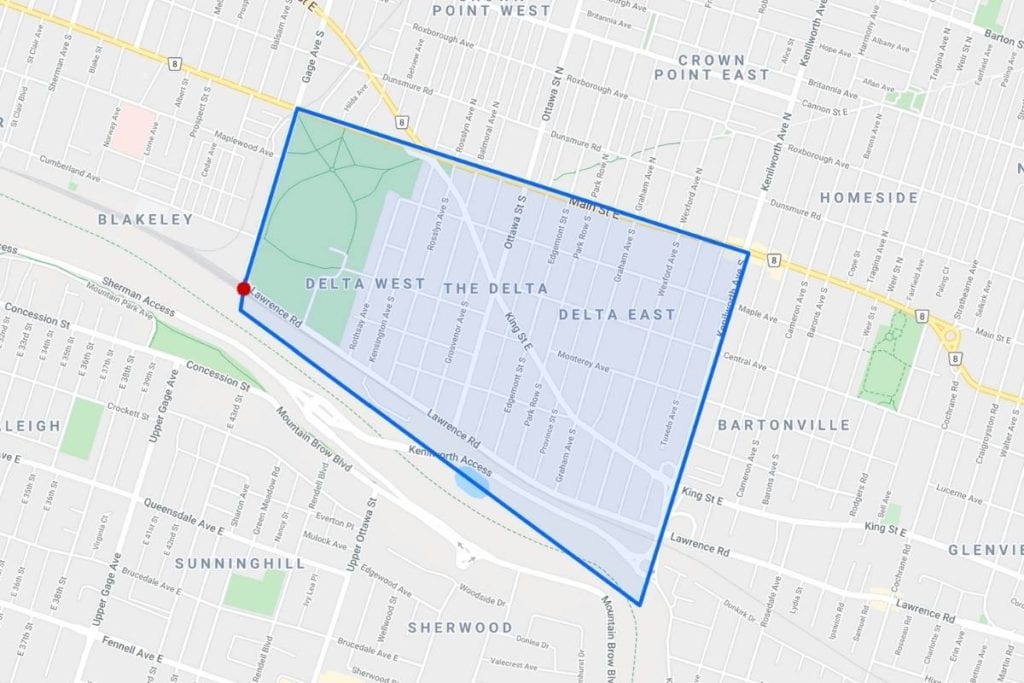
Delta/Gage Park outer boundaries are Kenilworth Ave. South, Lawrence Rd, Gage Ave., and Main Street. This beautiful pocket of older homes is nestled closely to the Escarpment and enjoys spectacular views of seasonal foliage.

Gage Park, located on the western edge of the community, is a neighbourhood anchor that attracts visitors every day. Dog walkers, parents & children, cyclists, seniors, and anyone looking for a peaceful breath of fresh air can be found there. In addition to the day-to-day quiet foot traffic, there are weekly concerts and festivals all summer long. The park features fountains, play grounds, lawn bowling, tennis clubs and community gardens. In 2019, a new greenhouse was constructed in the park that is home to many exotic plants from all over the world. Admission is free for regular visitors, but you must purchase a $190 permit from City Hall if you would like wedding photos at this spot.  (For photos inside the Greenhouse, contact City Hall for additional info.)

Delta/Gage Park is also home to many schools (including French Immersion), transportation, and Ottawa St shopping district. Homes in this area are often very well cared for and full of character.


NOT SO GREAT STUFF

There isn’t much to dislike about the Delta Neighbourhood, unless you need a very large home, prefer a new build, or are looking for a condo. Typical homes are 2000 square feet or less, and there are no condos to be had. There are also train tracks running along the base of the Escarpment. Although the train runs very slowly and is relatively quiet, some may not like the sound if located very close.

High school students will need to travel to Bernie Custis School now that Delta Secondary School has closed.

Also, if you are looking to be close to nightlife action, this may not be the place for you.


FAVOURITE SPOTS THE NEIGHBOURS LOVE

Gage Park is definitely the highlight of the area. It’s a great place to visit all year round.

The Bruce Trail – This famous trail runs right along the escarpment.

Kenilworth Stairs

There are also a growing number of new restaurants and old staples in the area. Here are a few:

Rankin’s Grill

Buddy’s Restaurant

Caro Restaurant & Bar 

Gage Park Diner


SIMILAR NEIGHBOURHOODS IN T.O

High Park

Riverdale

Leslieville


DELTA/GAGE PARK NEIGHBOURHOOD IN A NUTSHELL

Delta is a well-established, family-friendly neighbourhood for people looking to enjoy time outdoors.  It appeals to folks who wish to be close to shopping and amenities, while not living downtown. There is plenty of street parking in comparison to many other older areas in Lower Hamilton. Property values have increased approximately 75% in the past 5 years – a rate slightly higher than the municipal average.


Real Estate Statistics (as of November 2020)

Average Selling Price: $657,000

Average Days on Market: 8

Months of Inventory: .35! This is incredibly low


Ready to Buy in the Delta / Gage Park Area?

Leave you details below and we'll reach out!

  • This field is for validation purposes and should be left unchanged.

08.28.2020

7 Farmer’s Markets In and Around Hamilton

In The Community

The dog days are over, and the season is winding down as August comes to a close.   Talk of back to school and even (gasp!) pumpkin spice is starting to surface into daily chit-chat.

For those of us who live for heat and sunshine, the abundance of delicious fresh produce that is available at this time of year relieves some of the sadness at the end of summer.

The farmers’ markets in and around Hamilton offer the best of nature’s in-season bounty, so we thought we would offer suggestions for all seven corners of the city. (Did you know Hamilton had seven corners?)


Hamilton Farmers’ Market – 35 York Blvd

The Hamilton Farmer’s Market downtown is open year round.  First open in 1837, it now boasts 50-60 vendors and is a much cherished part of Hamilton’s history.  Offering fresh produce, grocery items, seafood, specialty foods, wine, coffee, fresh flowers, and more – the variety at this farmer’s market is second to none.  Open Tuesday, Thursday, Friday, and Saturday, the hours are the most flexible of all the markets.  Access by different forms of transportation and parking are described here to help you plan your visit.

Ottawa St Market – Lot 2C (Next to 3 Britannia Ave)

In many ways, Ottawa St represents the best of Hamilton’s personality: energy, variety, resilience, and grit.  It is in Southern Ontario, so it is appropriate that the area include a farmers’ market to show off  the best of what our growers have to offer.

Open every Saturday all year round, this farmers’ market only works with vendors within a 100 km radius. This means that the offerings are truly farm fresh! Read through the list of produce and mouthwatering baked treats before you go, and plan your visit carefully!

Ancaster Farmers’ Market – 630 Trinity Rd S, Jerseyville, ON (Ancaster Fairgrounds)

If you’re craving farm-freshness mid-week, this will be one of your go-to’s, since it is open on Wednesdays from 3:00-6:00 pm.

Ancaster has a proud history as a vibrant agricultural community, and the farmer’s market represents that heritage right in the heart of town at the Ancaster Village.  Local growers and other assorted vendors offer their wares and provide a space to gather with friends and neighbours.

Many prefer to shop in person, but there also is an option to order online.  Orders placed between Thursday and Monday can be picked up, curbside, on Wednesdays.

Dundas Farmers’ Market – Hatt Street and Miller’s Lane

This seasonal market in Dundas is a small, not-for-profit coalition of growers and producers who offer a direct link between farmers and the community.  It runs from June to October, and is a weekly tradition, open on Thursdays from 3:00-7:00 pm.

Some of the vendors accept online orders and will arrange for pickup at their vendor tents on Thursdays as well.

Locke St Farmers’ Market – Corner of Locke and Herkimer (260 Locke St S)

The best place to find information about this west-end market is on their Facebook page.  Locke Street Farmers’ Market aims to offer fresh, local, sustainably grown and produced food for the benefit of the community, local farmers and businesses.

Saturday mornings from 9:00-noon, from spring to fall, you will find the assortment of vendors set up for business in the parking lot of Locke St Tire and Automotive.

There is an open call for volunteers at this community market, too – so if this is your neighbourhood, you might consider lending a hand for a very delicious, worthy cause!

Hamilton Mountain Farmers’ Market – 19 Viewpoint Ave

The local growers who run the Hamilton Mountain Farmers’ Market have adjusted their hours to Fridays between 3:30-7:30.

This is a small, solid community effort that offers fresh local produce, floral products, spices, eggs, and more – and that has been in operation for 13 seasons.

Special Mention:  Binbrook Farmer’s Market – 2600 Hwy #56

The Binbrook Agricultural Society, for several years, operated the Binbrook Farmer’s Market to encourage Binbrook residents to think, shop, and eat locally.  As the world changes, the organizers have decided to take a year to re-imagine and re-design their community projects, as described in this Hamilton Spectator article from July, 2020.

There is some talk of a fall festival or market that gives us hope of something to look forward to as the leaves begin to turn, and the fruit harvest gives way to gourds and other hardy vegetables!

All photo credit: @hamontmarket

If you have discovered any other markets in the City, we’d love to hear about them!

08.21.2020

Year-To-Date Market Update! – Entire Greater Hamilton Area.

Buyer Basics

Greater Hamilton Area Market Update

A LOT has happened in the Real Estate Market this year. Needless to say, it has been a rollercoaster of emotions for many.

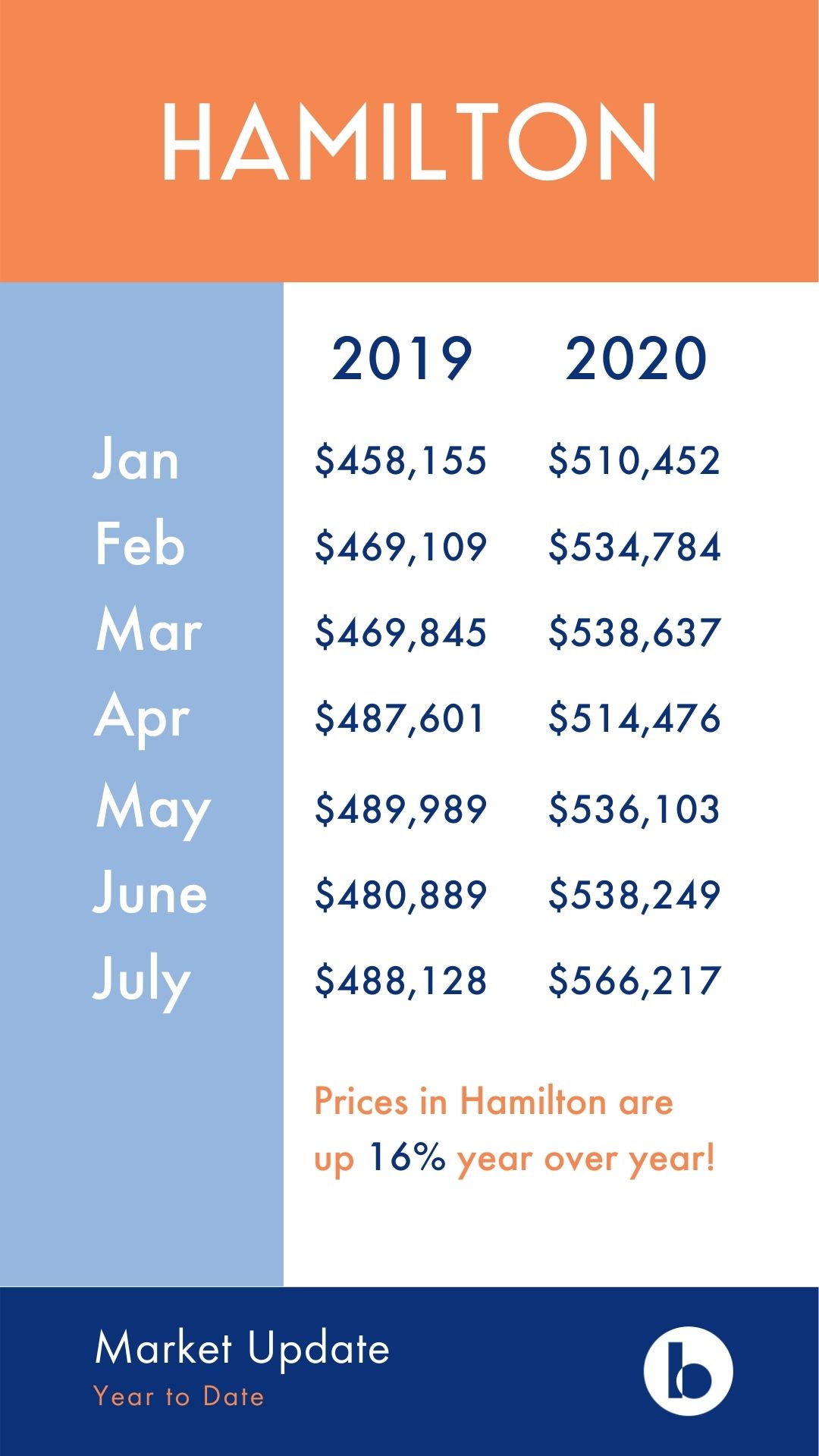
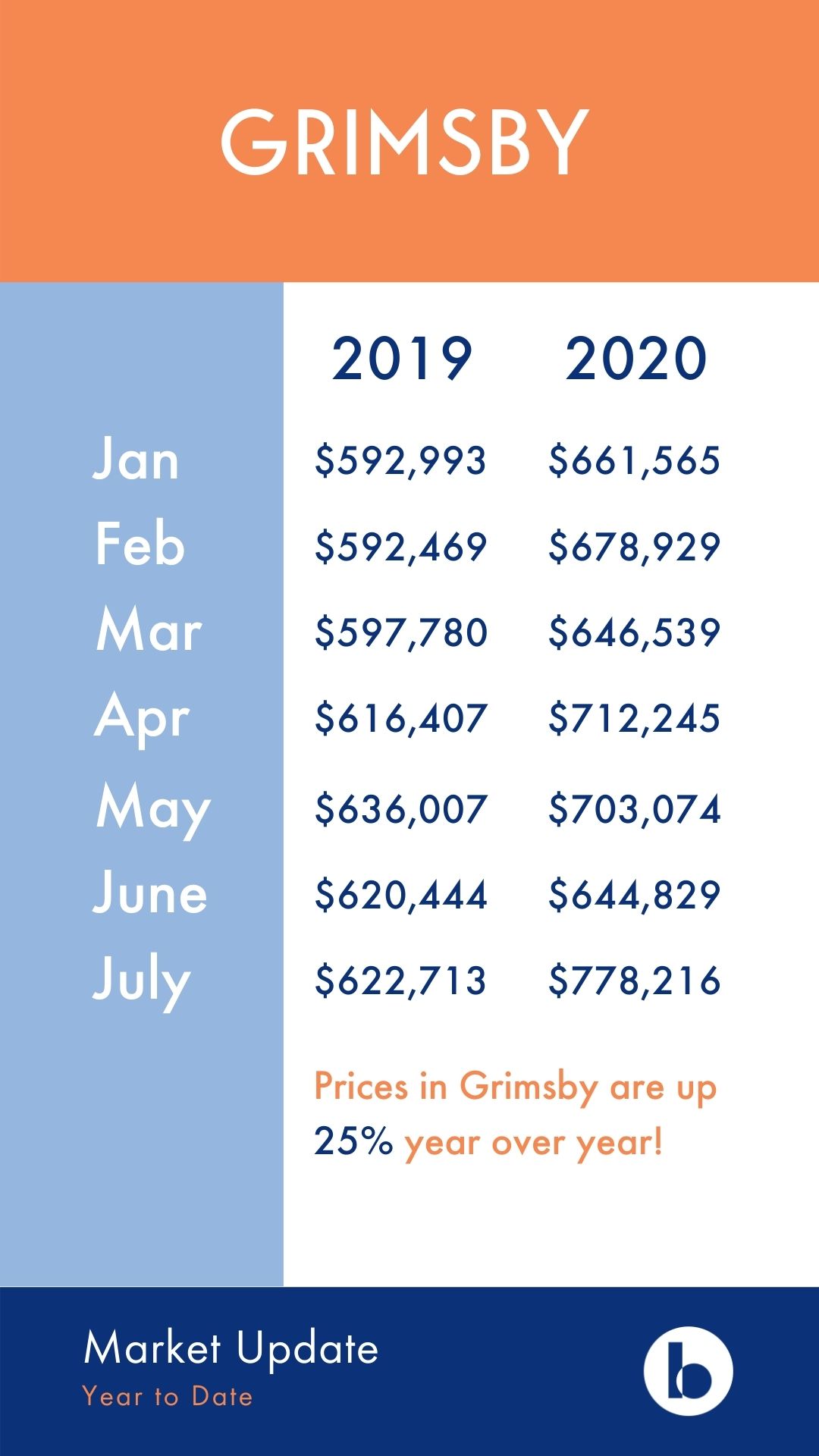
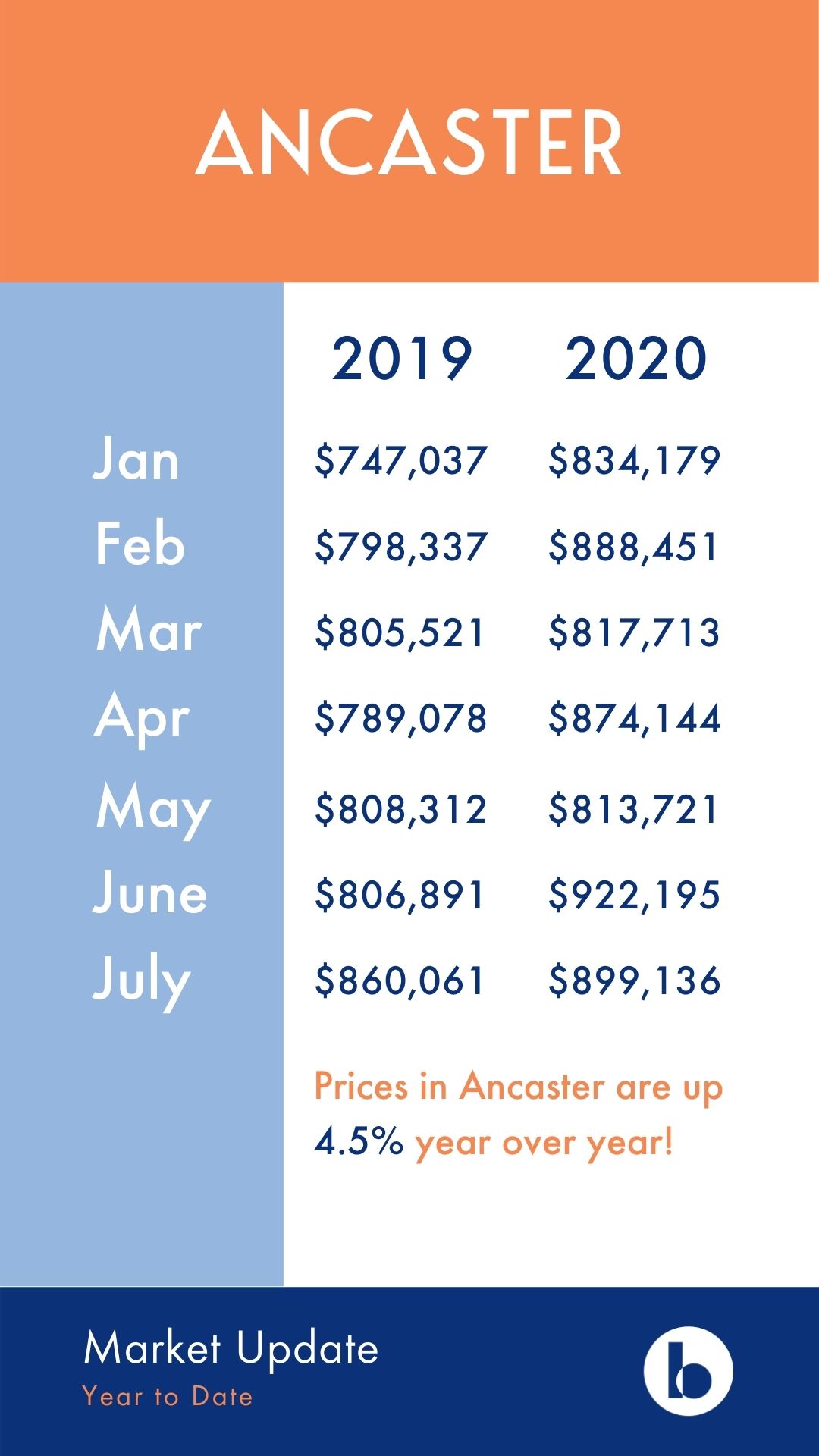
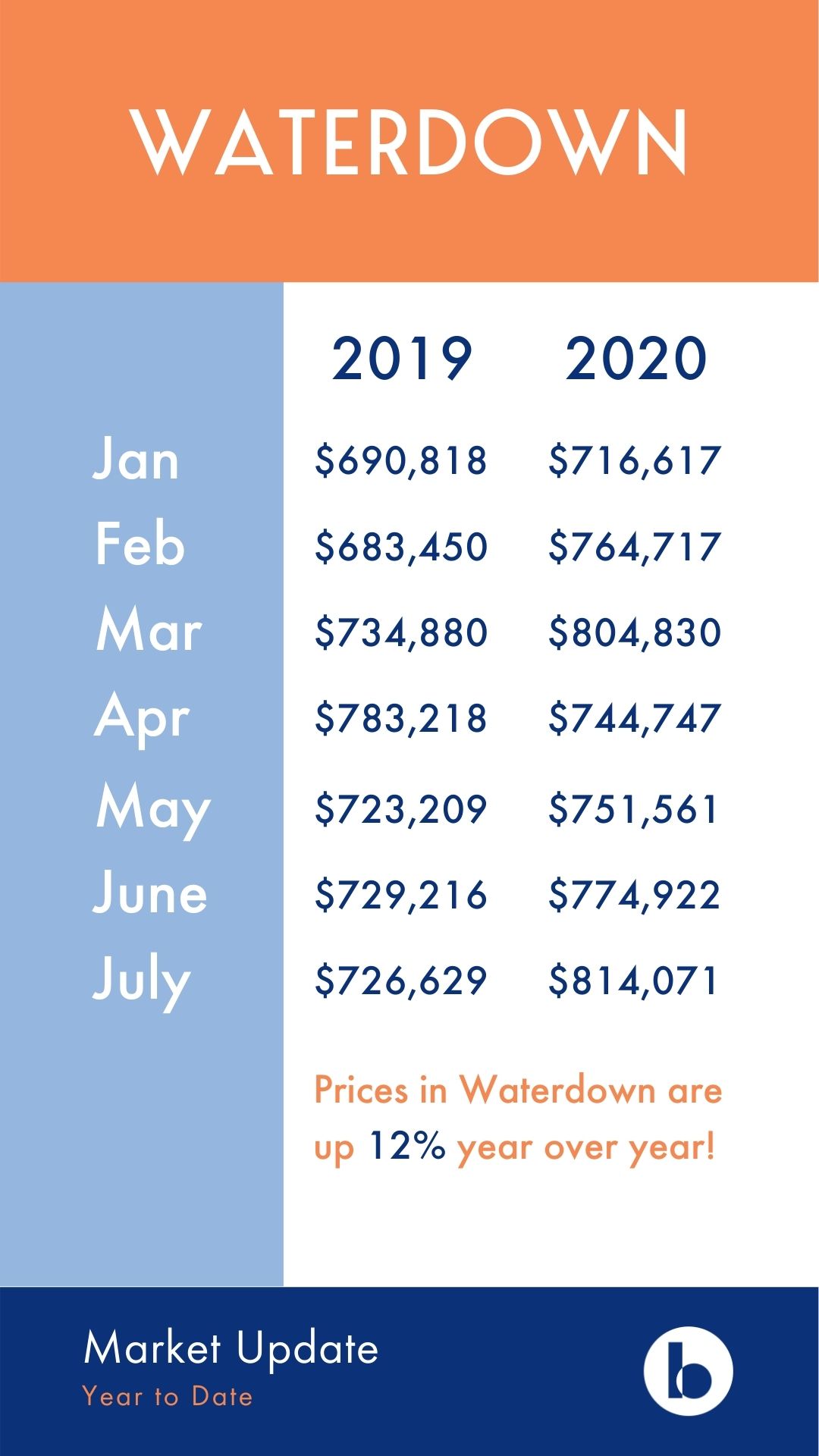
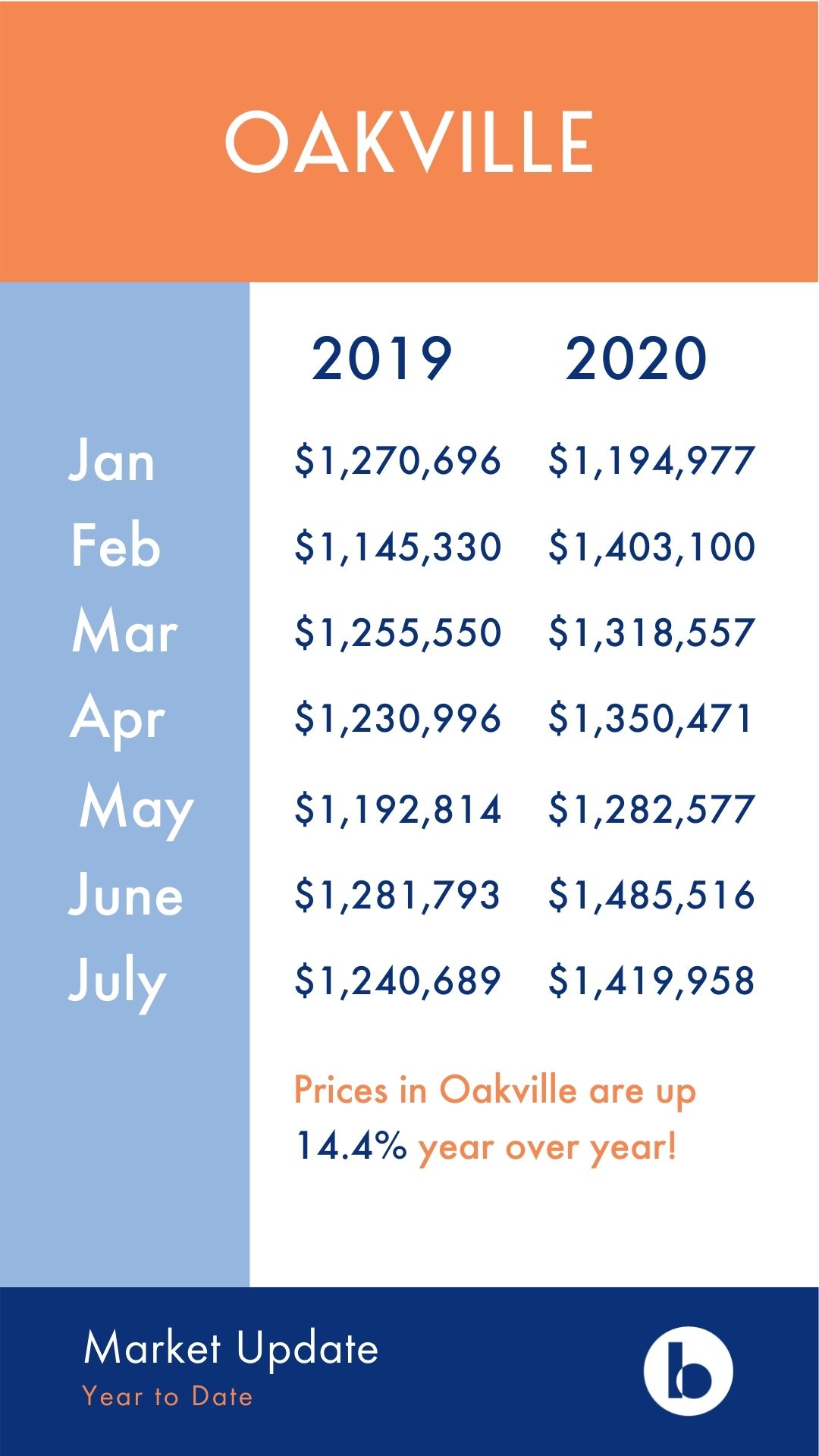
We have created a market update to show how each neighbourhood in the GHA (Greater Hamilton Area)  has performed since the beginning of this year- and it may take your breath away!  As you examine the image below, keep in mind that April was the first full month of the lockdown. Here are a few of the key takeaways.

  • A lack of housing supply has caused prices to skyrocket in almost all areas.
  • Incredibly low interest rates have increased buyer demand
  • Buyers looking for detached, semi-detached, and townhomes are adding to buyer demand for these property types and away from condos.
  • Buyers looking to leave the GTA are increasing demand in the GHA. Fact: 50% of all homes sold in the GHA are sold to GTA buyers!

If you’re looking to sell, now is a great time.

If you’re looking to buy, it’s a good time to get into a very robust market, but there are definite challenges.

As always, if you have any questions, feel free to reach out

07.14.2020

Before You Rent Your Cottage – Do These 5 Things.

Homeowners

Ontario is home to many lakes and rivers, and there are many stunning, privately owned properties in remote areas that are ideal for vacations away from the stress of city life.

If you are a cottage owner thinking about making a little extra cash by renting out your property for the first time, your timing is excellent! Demand for this type of accommodation is growing.

COVID-19 has changed the way we think about crossing borders, being in crowds, and even leaving our homes. Air travel has become a little scary for lots of people, and the appeal to a quiet vacation closer to home has increased. Families who have never camped may now consider the seclusion of a tent to be safer than a large hotel or resort, and see a cabin or cottage as a luxurious vacation getaway.

Before putting out an ad offering your place for rent, consider doing the following things to protect your investment and ensure a smooth experience:


1. Create a written list of detailed instructions for guests and leave them at the cottage.

Many of your renters will be city dwellers who may not know much about septic systems, wells, cisterns, or even how dispose of garbage that can’t be left at the curb. Provide some basic details about the house, property, neighbours, rules, local amenities, etc. Leave clear instructions for who to call in case of emergency. Do a little research – there are many templates online to help you write a great welcome book. Here’s one we like to get you started.


2. Screen your guests well.

Have a set of criteria for renters and a clear list of rules. Consider taking a damage deposit and clearly state what type of damage or behaviour will result in your keeping it. If you are not comfortable doing this on your own, you might want to hire a service like VRBO to help you through the process of finding renters, processing payment, keeping records, and building a reputation.


3. Furnish your cottage with durable items that will withstand heavy use.

Think shatter-resistant dishes, solid (but inexpensive) furniture, thick towels, and easily washable bed linens. Limit the number of knick-knacks and breakables. Decorate sparingly – just enough to create a homey feeling, but without putting any of your own treasured valuables at risk of being damaged.  If you need a little inspiration, take some tips from the experts.


4. Decide whether you will offer the use of boats, jet-skis, life-jackets, etc.

You may rent these separately or include them with the cottage. Whatever you decide, be sure to check with your insurance provider to see what their requirements, coverage options, and charges are for this type of rental.


5. Speaking of insurance.

Be sure to get all the information from them about your policy and how it will change if your cottage becomes a short-term rental property. You will want to ask about any restrictions, and be sure to have enough liability coverage.

With a little advance preparation, you can be successful in generating some income while providing safe and pleasant vacation options to others who are looking for a place just like yours!


If you’re considering whether or not to purchase a cottage, read “5 Questions you need to answer before buying a cottage”.