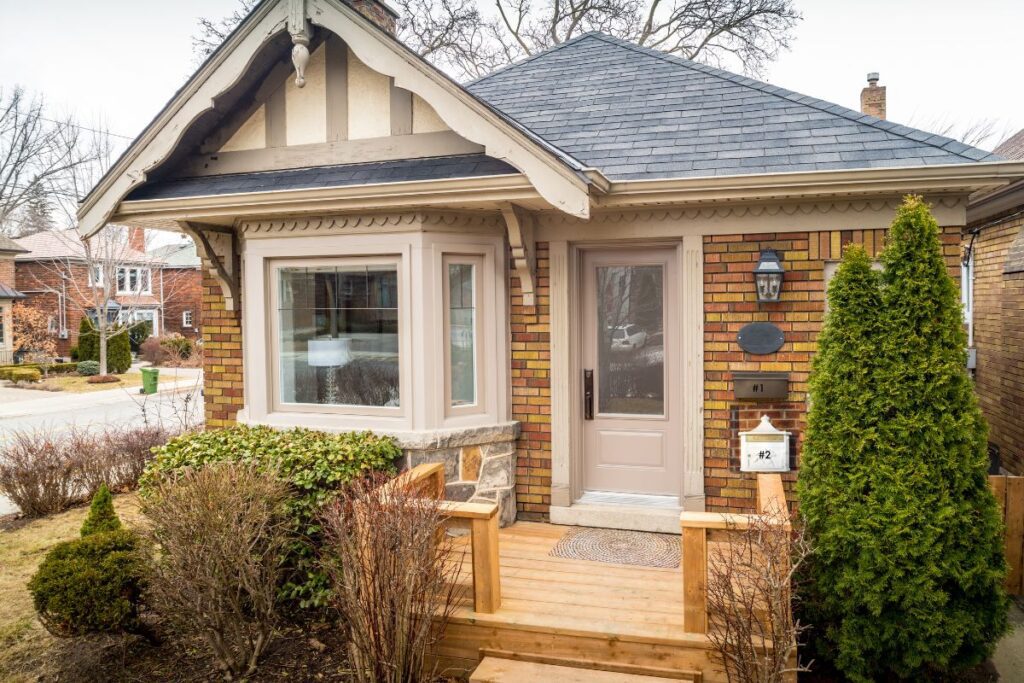
Basement apartments and ADUs in Hamilton are everywhere.
Some were added for aging parents.
Some were created to help cover a mortgage.
Some were built intentionally as income-generating units.
Others have been carved out over time.
They’ve become part of Hamilton’s housing landscape, and in many cases, they work really well.
What doesn’t get talked about much are the everyday realities that tend to show up after someone has already moved in. 👀
Most aren’t dramatic problems or horror stories. Just the practical details that were never part of the original design when the house was built for one household. The kind of nuisances that can interfere with enjoyment.
Whether you’re buying a home with a secondary unit or renting one, here are a few of the things people often discover later.
Safety and Fire Separation 🔥
This is the first place to look because this one goes beyond inconvenience.
The Ontario Building Code sets standards for secondary dwelling units, particularly around fire safety. Requirements can include:
- Properly sized egress windows
- At least two safe exits
- Minimum ceiling heights
- Fire separation between units
- Interconnected smoke alarms
- Specific drywall thickness or fire-rated assemblies
- In some cases, sprinkler systems
Some units meet these standards, others pre-date them. Some have been partially upgraded but still fall short of full compliance.
If you’re buying, verify what was permitted and inspected.
If you’re renting, look at basics like exits and window size.
Safety should be a priority when choosing a place to live.
One Address, One Mailbox 📬
In many neighbourhoods with community mailboxes, Canada Post assigns one box per civic address.
Two units, only one mailbox. 🚨
That means:
- One key
- Shared access
- Shared responsibility
Who holds the key? How is privacy handled? How do you make sure sensitive mail isn’t misplaced?
It’s rarely discussed during a showing, but it matters once you’re there.
Utilities and Shared Systems 🌡️
In homes that were originally single-family, utilities are often shared.
That usually means one furnace, one thermostat, one hydro meter, and one water meter.
In some properties, electricity has been separated and individually metered. That helps with clarity on hydro usage. But even in those cases, heating and water are often still shared systems, so not everything is fully divided.
Sometimes costs are split informally (often 60/40 to account for the basement being a bit smaller). Less often, utilities are included in rent, especially if the primary unit is owner-occupied.
The practical questions usually show up later:
Who controls the temperature?
What happens if one unit uses significantly more power?
Who holds the account with the provider?
What if one party doesn’t pay their share?
If service is interrupted, everyone in the house feels it. Several basement renters have shared that beyond what a listing shows, things like temperature control and noise from upstairs became everyday concerns once they moved in, especially when utilities were included and they didn’t have individual control.
Garbage in Hamilton Is About Coordination 🗑️
Hamilton allows one garbage container per residential address.
That container can absolutely hold multiple smaller bags. In many cases, one large bin is more than enough for two households.
The friction usually isn’t about space, but about coordination.
- Who stores the bin?
- Who takes it to the curb?
- Who buys tags if you exceed the limit?
- What happens if one unit fills it first?
- Who cleans it in July when something leaks?
These are everyday logistics that single-family homes never have to negotiate.
Parking Can Be Straightforward… Or Not 🚗🚗
Some homes handle this beautifully. Two-car driveways, clearly assigned spots, neighbourly cooperation.
Others take a little more effort to come up with acceptable arrangements.
If a shared driveway is single-width, someone is going to be moving their car. That’s just reality. And it’s fine if everyone’s schedule lines up. It’s less fine when someone works shifts, leaves early, or gets home late.
I have one client who moved into a 3-unit home with a long, single-wide driveway. They’re happy and making it work, but the amount of coordination it requires to make sure everyone has a spot with such different work schedules is impressive!
Sometimes there’s plenty of street parking and it’s a complete non-issue. Other times, street parking technically exists, but neighbours aren’t thrilled about the same cars lining the curb every day.
In winter, snow piles can shrink what felt like generous space in July. Guest parking becomes a negotiation. Delivery drivers block residents in.
None of this means a property doesn’t work as a multi-unit dwelling. It just means parking in a converted home isn’t always as simple as it looks during a sunny showing.
It’s worth asking:
- Who parks where?
- Is anything formally assigned?
- How does it work in winter?
Because driveway choreography feels very different once you’re living it.
Sound Transmission 👂
Older homes were not built with sound separation between floors.
That can mean hearing footsteps overhead, the hum of a laundry cycle, an early morning alarm, late-night conversations, dogs barking, or children playing.
And here’s the part people don’t always factor in: tenants change.
The quiet couple upstairs this year might move out next year. A family with young kids might move in. A shift worker could replace someone who kept regular hours. An owner who once lived upstairs might decide to rent the space instead.
If you’re in the basement especially, your day-to-day experience can shift depending on who’s above you.
No one is necessarily being unreasonable. It’s simply shared living in a structure that wasn’t originally designed for layered households.
When you’re looking at a space, it helps to think about lifestyle compatibility, as well as layout and square footage.
Water Pressure and Plumbing 🚿
Most of these homes were built with one kitchen and one bathroom in mind. When a second kitchen and extra bathrooms are added later, the original plumbing is still doing its thing.
You’ll usually notice it during the morning rush. Two showers running. Someone washing dishes upstairs. A toilet flush at exactly the wrong moment. The water pressure drops. The temperature changes. Someone yells from behind a bathroom door.
It’s common in older Hamilton homes. They just weren’t built with layered living in mind.
It’s the kind of detail that doesn’t show up during a quiet showing, but becomes obvious once real life kicks in.
Outdoor Space and Maintenance 🌱❄️🧹🐶
Shared outdoor space sounds lovely in theory.
Until it snows.
Or the grass hits that one week in June where it grows three inches overnight.
When a yard is shared, the questions start stacking up pretty quickly. Who shovels? Who cuts the grass? Who trims the hedges before they take over the walkway? Who gets the shed? And who’s hosting the backyard barbecue on Saturday night?
And then there’s the dog.
If one tenant has a dog and the other doesn’t, the yard suddenly has a different dynamic. Cleanup isn’t usually the debate. The timing is. Is it immediate? Is it later that day? Is it “I’ll get to it”? Those expectations matter a lot more when the space is shared.
Add in worn patches of grass or barking during someone else’s Zoom call, and you can see how small differences in lifestyle start to show up.
Under Ontario tenancy rules, if multiple tenants share outdoor space, maintenance is generally the landlord’s responsibility. In real life, though, a lot of properties run on handshake agreements and “we’ll just figure it out.”
That works beautifully when everyone’s on the same page.
It gets awkward when one person is always outside with the shovel while the other is watching from the window with a coffee.
Shared space works best when expectations are clear before the first snowfall.
Insurance and Disclosure 📄
If you’re buying, your insurer needs to understand how the property is being used.
If you’re renting, tenant insurance still protects your personal belongings and liability, even within a shared home.
Insurance complications rarely surface until there’s a claim. Our best advice? Talk to your insurer before buying or signing a lease. Better safe than sorry.
The Bigger Picture 🏡
Basement apartments and ADUs have helped many Hamilton homeowners make housing more accessible.
They’ve allowed families to live together, provided mortgage support, and created flexible living arrangements.
But they do mean more than one household sharing a structure that was originally designed for just one.
That means more coordination, communication, and shared systems.
It’s rarely one big issue that creates tension. It’s small daily details that no one thought to discuss.
If you’re buying, look at the property as a small multi-unit home, not just a bungalow with extra space.
If you’re renting, ask practical day-to-day questions, not just about rent and timing.
Comfortable, affordable housing is a big deal. When you find a place that works for you, clear communication with everyone involved makes it that much easier to enjoy, and helps avoid disappointment with the experience.
And if you’d like to talk through a specific property in Hamilton, we’re always happy to help you look at it from every angle.